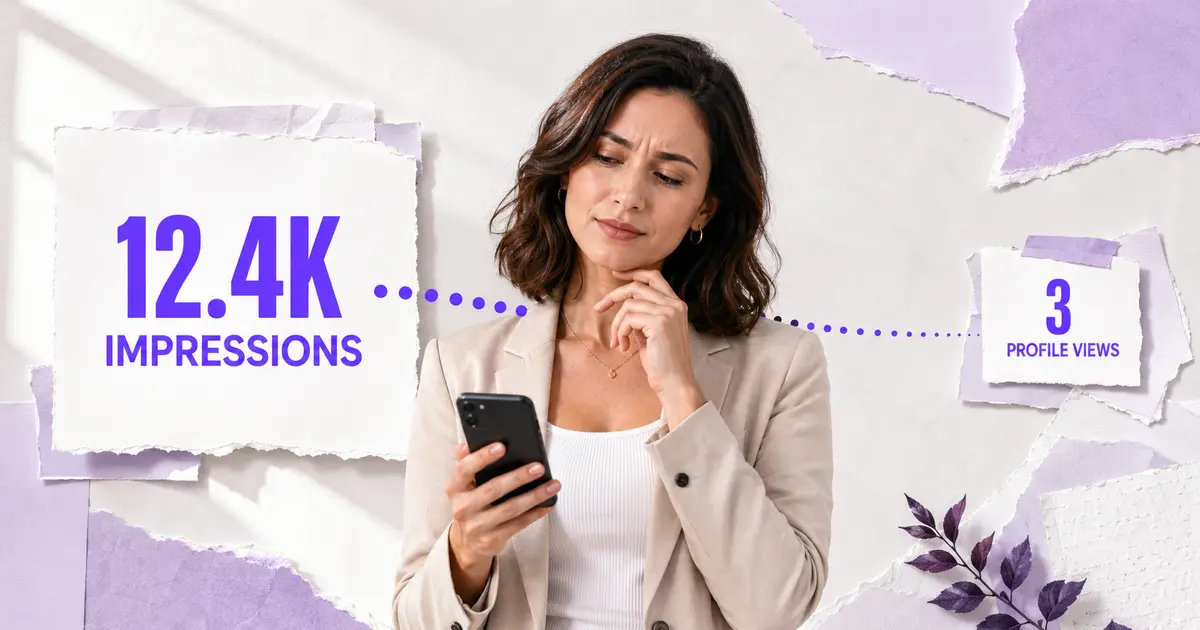
A LinkedIn post can look successful and still leave you wondering what it actually achieved. The impression count climbs. A few people react. Then you open the Profile activity section and find almost no profile views or new followers.
That doesn’t mean the post was useless. It means visibility stopped before curiosity became action.
The fix usually isn’t “post more.” First, work out where the handoff broke: the post may be reaching the wrong people, solving a problem without giving readers a reason to remember the author, or sending interested visitors to a profile that doesn’t continue the same promise.
TL;DR: impressions are the start, not the outcome
The practical order is simple:
- Confirm that the post reached relevant people.
- Give the reader a reason to associate the insight with you.
- Make your profile answer the question the post creates.
- Offer a next step that fits the reader’s level of interest.
- Compare several posts before changing your entire strategy.
Five numbers to check before rewriting anything
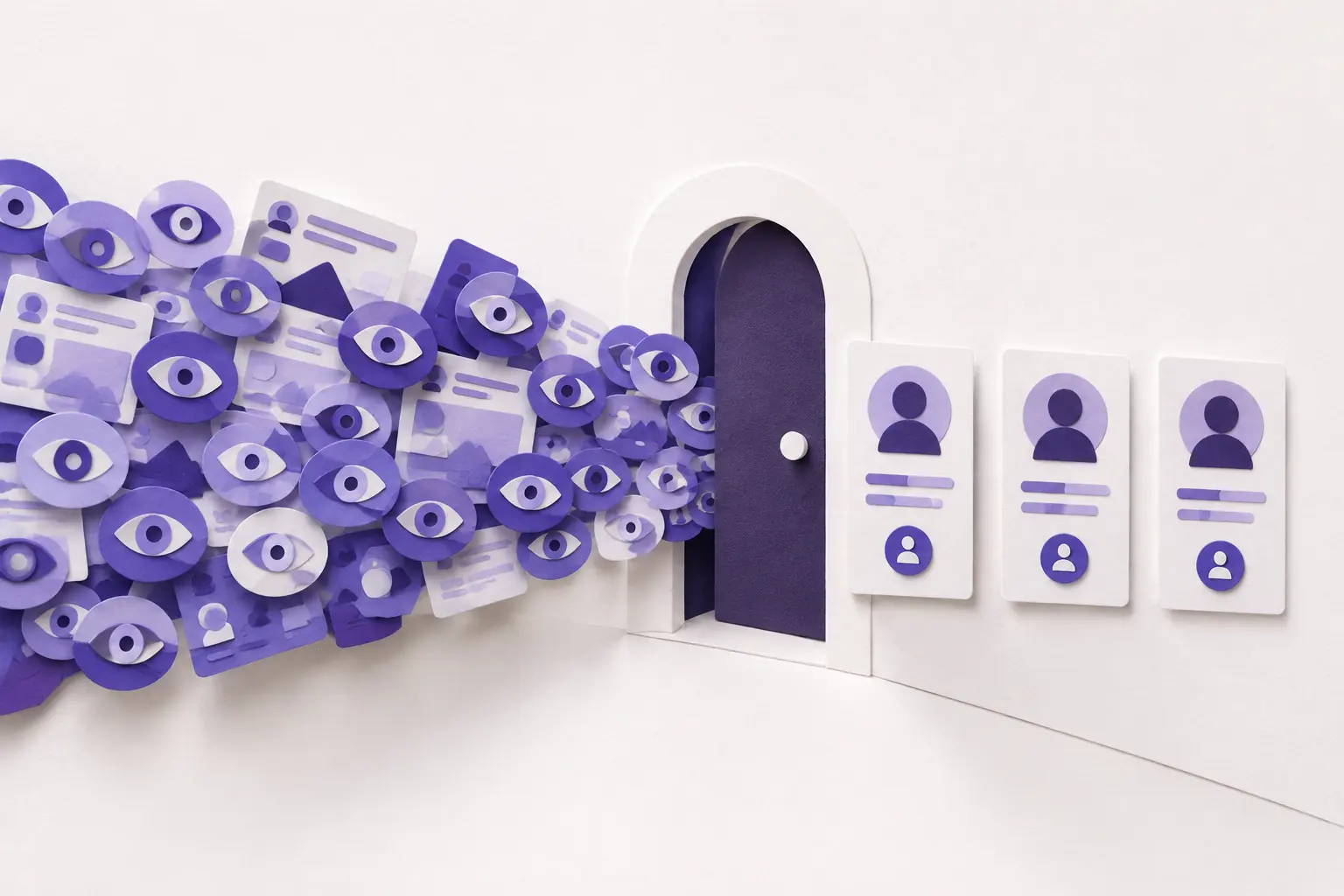
LinkedIn now gives members more useful post-level signals than an impression total alone. According to LinkedIn’s post analytics documentation, impressions count the number of times a post was shown, while Members reached estimates the distinct members and Pages that saw it.
The same analytics can also show Profile viewers from this post, Followers gained from this post, saves, sends and visits to external links. Availability can vary by account and content type, but the distinction matters: these numbers describe different stages of attention.
| Metric | What it tells you | What it does not prove |
|---|---|---|
| Impressions | How often the post was displayed | That someone read, remembered or trusted it |
| Members reached | Estimated unique audience breadth | That the audience was relevant |
| Profile viewers from this post | How many distinct people moved from the post to your profile | That they followed, contacted or hired you |
| Followers gained from this post | Whether the post prompted an ongoing connection | That the follower will become a customer |
| Visits to links in this post | Whether readers clicked an external link | That the visit converted |
Your own views and interactions can be included in post analytics, and LinkedIn describes several figures as estimates. Treat the dashboard as a directional tool, not an accounting ledger.
For a LinkedIn Page, use the Page analytics definitions rather than assuming every personal-profile metric works identically. LinkedIn’s Page content analytics guide separates impressions, members reached, clicks and engagement rate for Page posts.
Why impressions aren’t turning into profile views
1. The post is useful, but the author is interchangeable
Some posts answer a question so neatly that the reader takes the answer and leaves. That’s not a failure; useful content should be useful. The conversion problem appears when nothing in the post makes the reader wonder, “What else does this person know?”
Generic advice is especially vulnerable. “Be consistent,” “know your audience” and “provide value” can appear under almost anyone’s name. A stronger post adds a recognizable lens: a decision rule, a specific trade-off, a clear disagreement or a small framework the reader can reuse.
You don’t need to force a personal story into every post. You do need to show some judgment.
Instead of writing “short posts are better,” explain when brevity helps and when it hides the detail a buyer needs. The reader may agree or disagree, but they can now identify the thinking behind the post.
2. The opening attracts attention from the wrong audience
A broad hook can create a large but poorly matched audience. “The biggest career mistake everyone makes” may earn curiosity from students, recruiters, founders and people who simply enjoy workplace debate. If your service is built for B2B finance teams, most of that attention has nowhere useful to go.
Compare that with: “The finance handoff that delays a SaaS renewal by two weeks.” The second opening will probably interest fewer people. It also tells the right reader that the post may be for them.
High relevance can look smaller in the feed and stronger in the actions that follow. Check viewer demographics where LinkedIn provides them. Job title, industry, seniority, company size and location can reveal whether the post reached the room you meant to enter.
3. The post resolves the entire curiosity gap
There’s a delicate balance here. Holding back the useful answer to manufacture clicks is frustrating. Giving the answer without showing the larger problem can make your profile irrelevant.
A good post should stand on its own, then open a natural second question.
Imagine a consultant explaining three reasons onboarding emails fail. The post can give all three reasons honestly. It might close with: “The next check is whether the promise in the email matches the first five minutes inside the product.” That sentence doesn’t hide the answer. It signals a wider area of expertise that an interested reader may explore on the profile.
The goal is continuation, not a cliff-hanger.
4. Your profile doesn’t finish the sentence
The post creates a promise; the profile must confirm it.
If you write about reducing operational risk but your headline only says “Founder | Entrepreneur | Speaker,” a visitor has to work out the connection. Many won’t. A clear headline should help the right person understand who you help, what kind of problem you work on and why your perspective is relevant.
Then check the first visible parts of the profile:
- Does the banner support the same subject, or is it decorative?
- Does the About opening continue the post’s promise?
- Does the Featured section provide a useful next step or proof?
- Is your current role understandable outside your own company?
- Can a visitor tell what to do next without hunting?
This is not an invitation to cram the profile with keywords. It’s a consistency check. The post and profile should feel like two pages from the same book.
5. There’s no credible proof near the promise
Readers may like an idea without trusting the person behind it yet. That gap is normal on a professional network.
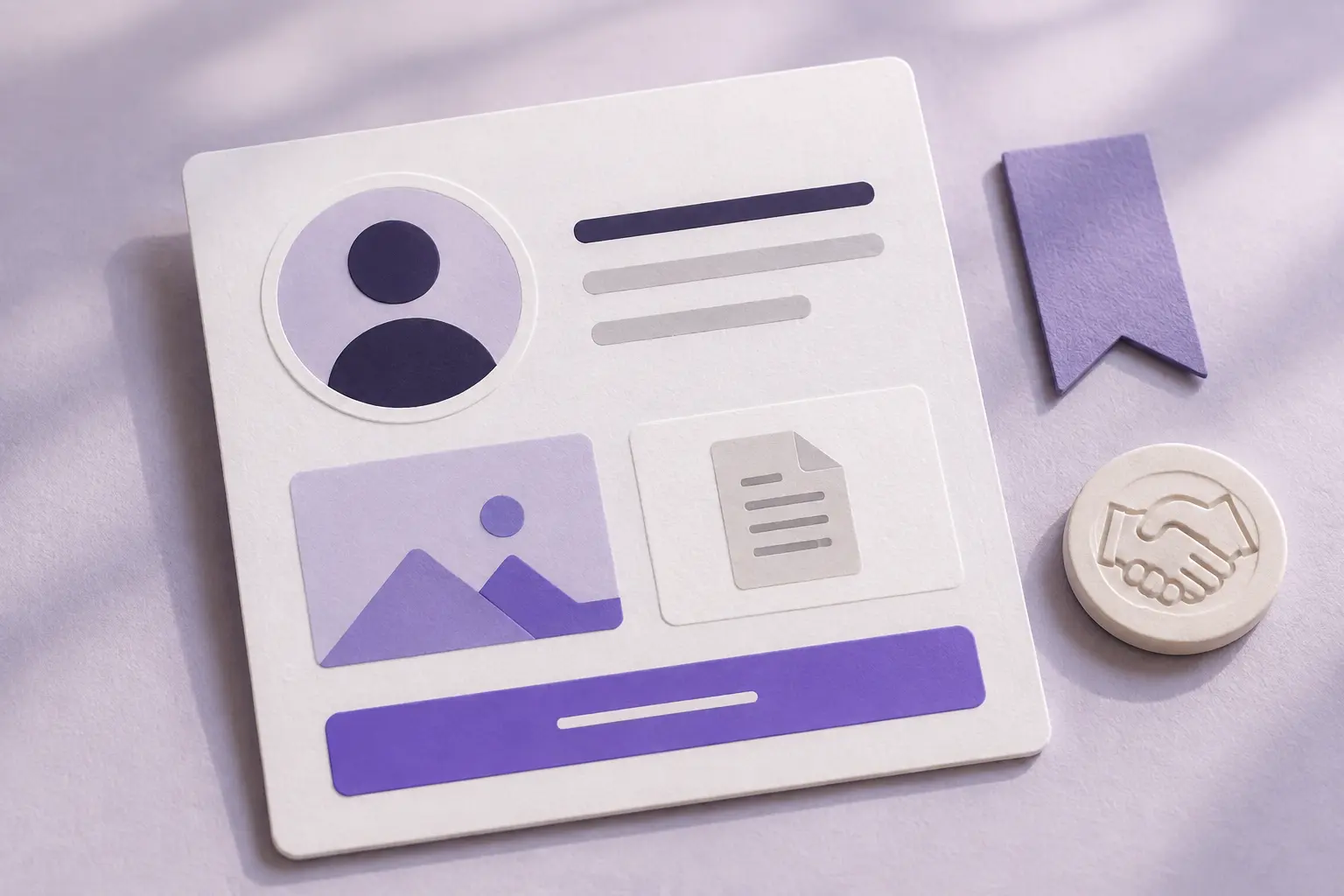
Proof doesn’t have to mean a dramatic customer result. It can be a clear work sample, an original checklist, a detailed explanation of your method, a presentation, a certification you genuinely hold or a well-maintained company page. The important word is genuinely.
Avoid vague authority signals such as “helped countless brands” when you can’t substantiate them. A modest, verifiable example is more persuasive than an inflated claim.
If your post discusses webinar promotion, for example, a Featured item containing a practical webinar briefing template makes sense. A visitor can inspect the quality of your thinking before deciding whether to follow or contact you.
6. The next step asks for too much, too soon
“Book a call” is not the only call to action, and it’s often too large for someone who discovered you 30 seconds ago.
Match the next step to the temperature of the reader:
| Reader signal | Lower-friction next step |
|---|---|
| They learned one useful idea | Invite them to follow for the next part |
| They have a related question | Ask for a specific comment or reply |
| They want the method | Point to a relevant guide or Featured resource |
| They are comparing solutions | Explain what your service does and does not cover |
| They already show buying intent | Offer a contact or enquiry route |
A precise CTA also reads more naturally. “Follow for more marketing advice” is vague. “Follow if you want the 30-day audit template next” tells the reader what the relationship will contain.
7. You’re judging a system from one post
One post is a story. A month of posts is a pattern.
Topic, format, timing, network composition and the strength of the opening can all affect distribution. A post may attract few profile views because the answer was intentionally narrow, while another becomes a strong profile driver even with fewer impressions.
Don’t rebuild your profile after one quiet result. Track at least four weeks of posts in a simple sheet. Record:
- topic and post format;
- impressions and Members reached;
- in-network versus out-of-network distribution when available;
- profile viewers from the post;
- followers gained;
- link visits, saves and sends;
- the next step used in the post.
Look for combinations, not a single winner. You may discover that opinion posts create comments, practical templates create saves, and narrow problem-solving posts create profile visits. Each can have a place if you know its job.
A 30-day repair plan
Start with the profile before trying to force more distribution.
Week 1: repair the handoff. Rewrite the headline and the first lines of the About section so they clearly continue your core post topic. Remove Featured items that no longer support that positioning.
Week 2: test sharper subjects. Publish two posts about problems your intended audience can recognize immediately. Keep the opening specific enough to filter out casual attention.
Week 3: test the next step. Use one low-friction CTA in each post. Don’t ask people to follow, comment, download and book a call in the same ending.
Week 4: compare the transitions. Review impressions → Members reached → profile viewers → followers or link visits. Keep the posts that moved the right people forward, even if they weren’t the biggest posts by impressions.
Where LinkedIn growth support fits
Content and profile clarity come first. Additional distribution can expose a strong post or profile to more people, but it cannot make an unclear promise more convincing.
FastSocialz offers a LinkedIn Growth service designed to support audience-building activity without asking for your LinkedIn password. It should be treated as support for a sound content system—not a guarantee of profile views, followers, leads or sales.
If the profile is still vague or the posts keep attracting the wrong audience, repair those issues before adding another layer of reach.
Final takeaway
Impressions answer a narrow question: was the post shown? They don’t tell you whether the right person noticed, became curious, understood your value or chose a next step.
When profile activity is quiet, resist the urge to chase a bigger top-line number immediately. Tighten the subject, make your judgment visible, align the profile and lower the friction of the next action. Then judge the pattern across several posts.
A smaller post that moves the right reader one step forward can be far more useful than a large post that ends in the feed.
Structured support, no account access
Where a growth service fits on LinkedIn
Content and profile conversion come first, and no service changes that. A growth service cannot repair a vague bio, an audience that was never yours, or a post that gives viewers no reason to follow.
What it can do is handle the part most people never get around to: putting your profile in front of the right audience, consistently, while you concentrate on the content. FastSocialz builds campaigns by hand and runs them from your public profile link, so it never asks for your LinkedIn password and never logs in as you.
Explore LinkedIn Growth →No growth service can promise that a given number of views will produce a given number of followers.Questions, answered plainly
Frequently asked questions
What counts as an impression on LinkedIn?
For member posts, LinkedIn defines impressions as the number of times a post was shown. The same person can contribute more than one impression if the post is displayed again, and LinkedIn notes that these figures are estimates.
What are Profile viewers from this post?
LinkedIn describes this as the number of distinct members and Page admins who viewed your profile from a specific post. It helps show whether a post created interest in the author, not just visibility in the feed.
Why did a high-impression LinkedIn post gain no followers?
The post may have reached a broad audience, resolved the question without creating further interest, or led to a profile that did not clearly explain why someone should follow. Check relevance, profile consistency and the next action.
Should every LinkedIn post try to generate leads?
No. A post may be designed to teach, start a conversation, support existing relationships or establish a point of view. Decide the job of the post before judging its result.
How long should I test a LinkedIn content change?
Four weeks is a practical first review window for an active account. It provides enough posts to compare topics and transitions without treating a short sample as a permanent rule.
Keep reading
Related guides

How to Add Chapters to YouTube Videos
A practical guide to planning, formatting, publishing, and checking YouTube chapters without turning your description into a mess.

YouTube Impressions Up but CTR Down? 7 Checks Before You Change Your Thumbnail
A falling click-through rate is not automatically bad when YouTube is showing your video to more people. Use these seven checks before changing the thumbnail.

YouTube Dynamic Thumbnails vs A/B Testing: What Creators Should Know
YouTube has announced dynamic thumbnails and video-cut testing, but its existing A/B tool works differently. Here is what each option tests and what creators can do now.